November 6, 2026 · Football Strategy
Inverted Full-Backs Explained
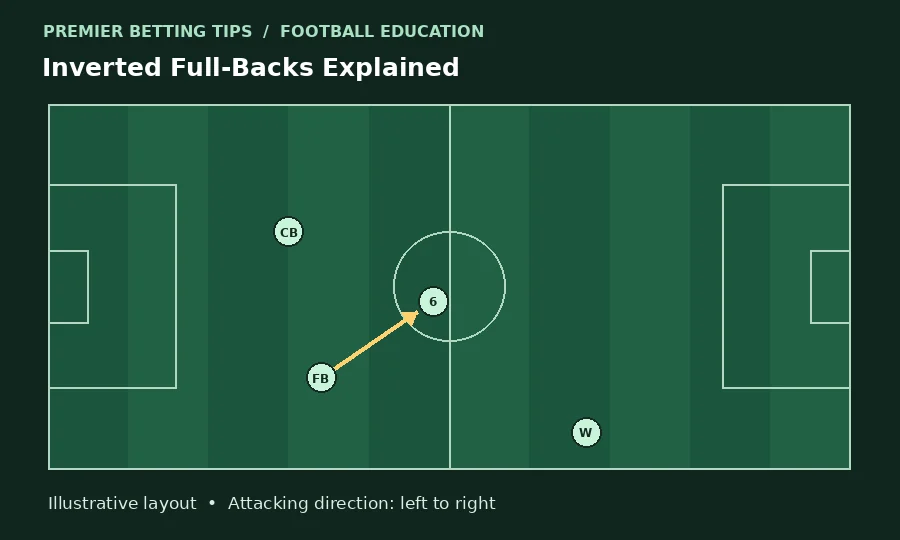
Understand why full-backs move into midfield, how teams use the extra passing option and who covers the flank after a turnover.
Move inside with a purpose
An inverted full-back can move beside the holding midfielder while a winger holds the touchline. This provides a central outlet and can draw an opponent away from the winger. The movement works when the centre-back can see a clear pass into the full-back’s feet.
Coordinate the wide roles
If the winger also comes inside, ask who will hold width. The near centre-back may need to move wider to give the ball carrier a safe pass. Against a team with two quick outlets, keep enough players behind the ball to delay the first counter.
Read the opponent
If a winger follows the full-back inside, switch to the wide player. If the winger stays outside, use the full-back as a bounce option to reach the next midfielder. Rehearse both responses so the move depends on the defender’s decision.
Further reading
For an example of how tactical context can be combined with venue and team news, see the Premier Betting Tips Situational Match Analysis hub.
Football Strategy · AI-assisted educational guide. Independent human review has not been verified. Tactical examples are illustrative.
Updated: November 6, 2026