November 6, 2026 · Football Strategy
Wing-Back vs Full-Back Explained
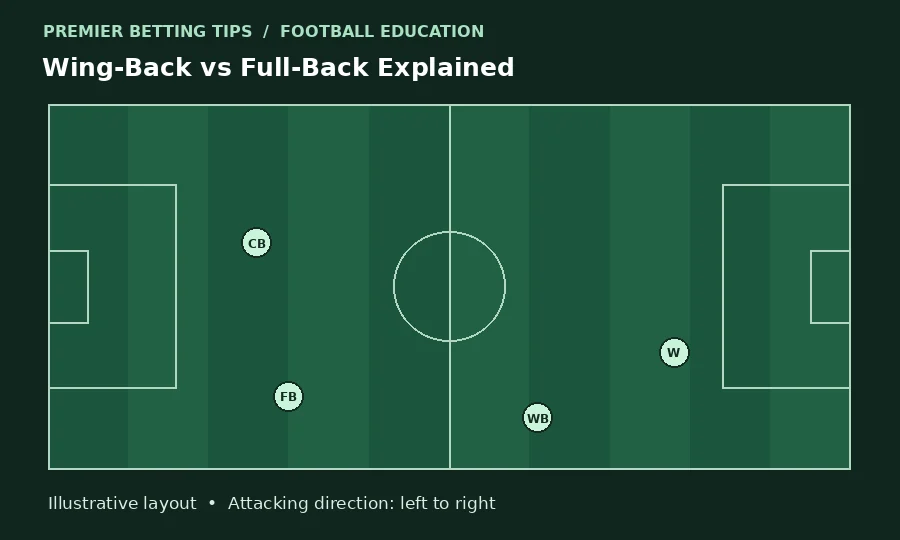
Compare the wing-back and full-back roles in possession, defensive transitions and back-four or back-five systems.
Start with the defensive line
A full-back usually starts on the outside of a back four. A wing-back often forms the outer player in a back five when defending and pushes higher when the team has the ball. A full-back can also advance high when the structure allows it.
Check who provides width
In a back four, a winger may hold the touchline while the full-back overlaps selectively. In a back three, the wing-back may be the primary wide outlet. The nearby centre-back can cover the channel, but moving too far out can open a gap between defenders.
Watch the recovery run
When play switches to the far side, the wing-back must see both the ball and the runner behind. A full-back in the same situation may tuck inside to defend the back post. Watch the nearest supporting player to tell how each team shares the job.
Further reading
For an example of how tactical context can be combined with venue and team news, see the Premier Betting Tips Situational Match Analysis hub.
Football Strategy · AI-assisted educational guide. Independent human review has not been verified. Tactical examples are illustrative.
Updated: November 6, 2026