November 6, 2026 · Football Strategy
What Is the Offside Rule in Football?
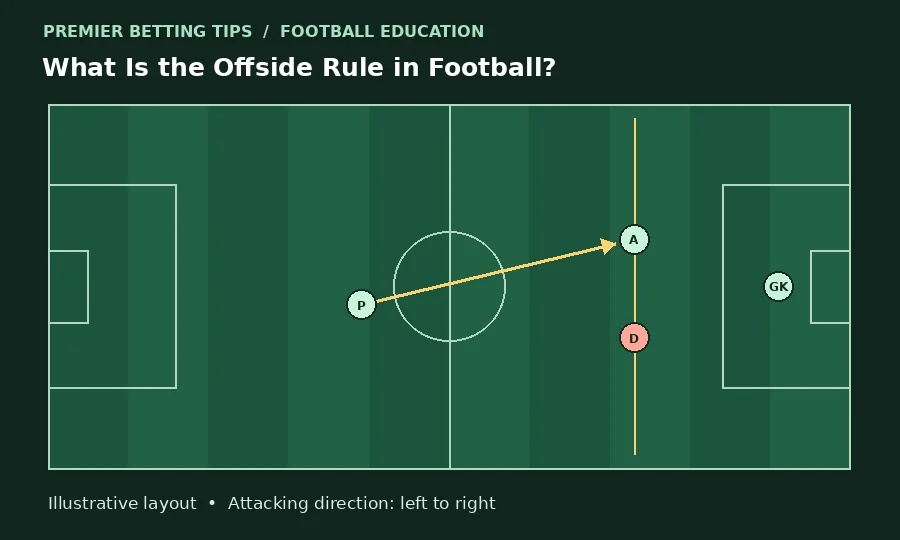
Use a freeze-frame example to understand offside position, active involvement, the second-last opponent and the direct-restart exceptions.
Freeze the teammate’s play of the ball
In open play, an attacker is in an offside position if a playable part of the body is in the opponents’ half and nearer their goal line than both the ball and the second-last opponent. A player level with the second-last opponent is onside. Hands and arms do not count. For a goalkeeper’s throw, use the final point of contact.
Check what happens next
The position becomes an offence only if the player becomes involved, such as playing the ball, interfering with an opponent or gaining an advantage after a rebound, deflection or deliberate save. A deliberate play by a defender can reset offside, except for a deliberate save.
Try the freeze-frame
Imagine the attacker level when the pass is played and clear of the defenders when they receive. Their later position does not make that pass offside. There is no offside offence for receiving directly from a goal kick, throw-in or corner kick. Check IFAB Law 11 for the full wording.
Further reading
For an example of how tactical context can be combined with venue and team news, see the Premier Betting Tips Situational Match Analysis hub.
Rules reference checked 6 November 2026. IFAB Law 11 on offside.
Football Strategy · AI-assisted educational guide. Independent human review has not been verified. Tactical examples are illustrative.
Updated: November 6, 2026