November 6, 2026 · Football Strategy
How to Choose a Football Formation for Your Team
Compare seven football formations by player availability, defensive cover and build-up options. Use a simple test to decide which shape suits your team.
Start with three questions
Who can hold width, who receives under pressure and who protects the middle after a turnover? Put names against those jobs. If a shape relies on a player doing two jobs at once, work out when a teammate takes over.
Compare seven starting shapes
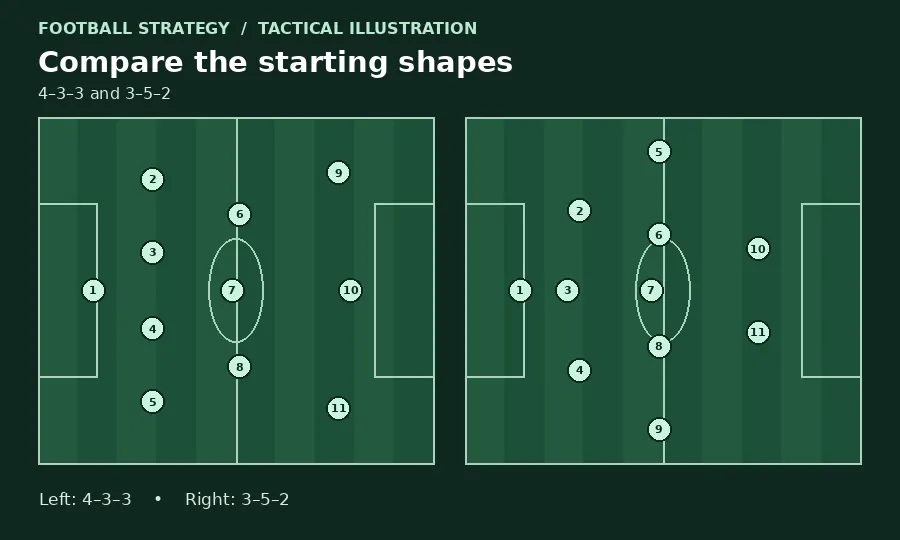
A 4–3–3 gives you natural width and three midfield roles. A 4–2–3–1 offers two deeper midfield outlets and a number ten. A 4–4–2 provides a front pair and clear defensive banks. A 4–4–2 diamond adds central passing options but needs a reliable source of width. A 3–4–3 can stretch the opposition with wing-backs and wide forwards. A 3–5–2 supports two strikers and a midfield three. A 5–4–1 adds defensive width but needs a reachable outlet.
Trial two shapes
Play two short bouts against the same press. Count controlled exits and dangerous central turnovers. Review who provided cover when a wide player went forward. Use what you see to choose a starting shape and one adjustment for the match.
Put it into practice
For example, a team with two good strikers but few natural wingers can start with a diamond or 3–5–2. Test whether the full-backs or wing-backs can recover quickly enough. If neither shape gives reliable coverage, start with a flatter midfield and ask one forward to drop selectively.
Further reading
Explore the related Football Strategy guide for more detail.
See how team shape fits alongside form and availability in Premier Betting Tips’ situational match analysis.
Football Strategy · AI-assisted educational article. Independent human review has not been verified. Examples are illustrative.
Updated: November 6, 2026