November 5, 2026 · admin
Football Tactics Explained in Four Phases
In possession
Watch the players around the ball carrier before following the next pass. A full-back moving inside may offer a route through midfield while a winger holds the touchline. Ask who provides width, who threatens behind and who gives the passer a safe way back.
Out of possession
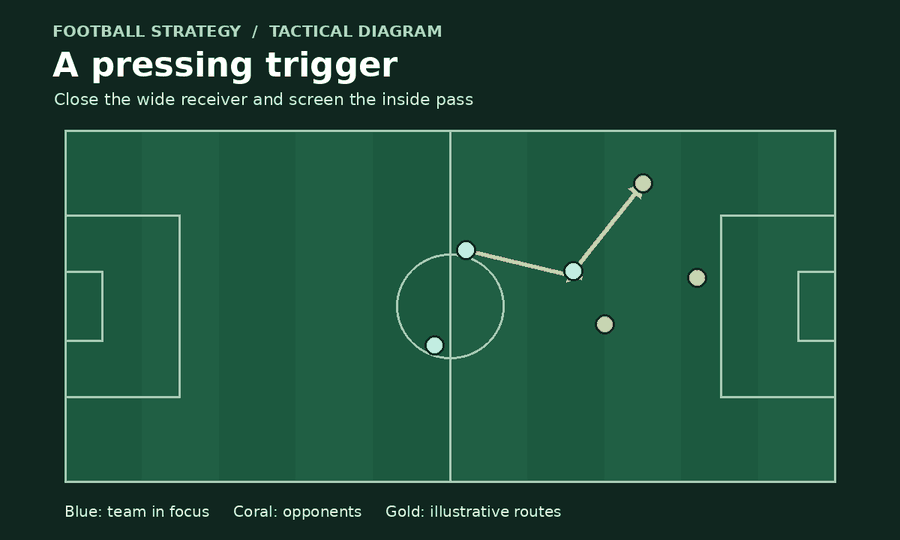
Find where the first line starts to engage. A team can allow passes between centre-backs and press as soon as a full-back receives facing their own goal. The trigger matters because it tells teammates when to move together and which escape routes to cover.
When possession changes
After losing the ball, identify whether nearby players can slow the first pass and whether anyone covers the space behind them. After winning it, check if a forward runner has an advantage. When there is no clean route forward, retaining possession can give the team time to reconnect.
Why the score changes the picture
A team protecting a lead may give up ground and keep more players behind the ball. When reviewing that spell, compare it with the period before the goal. That helps separate an intentional change from a problem that was already visible.
A five-minute viewing exercise
Pick one side and note three recurring patterns, such as a midfielder dropping into the first line or a winger stepping out on a backwards pass. For each, record the trigger, the teammate’s response and the space the opponent could use. Rewatch one sequence to test your first reading.
Further reading
Browse football tactics and coaching at Football Strategy. For match analysis that considers form, venue and squad availability, visit the Premier Betting Tips Situational Match Analysis hub. Betting content is for readers aged 18 and over. Bet only what you can afford to lose.
Source: FIFA Training Centre on defensive phases.
Prepared with AI assistance for footballstrategy.org/. Tactical scenarios are illustrative. Independent human review has not been recorded.
Updated: November 6, 2026